.jpg&w=3840&q=75)
The international grading system defines commercial value for every kernel. Here is what every bulk buyer needs to know.
The cashew grading system is the language of the global trade. When a buyer in Hamburg requests "W240", they expect precisely 210–270 whole white kernels per pound. Any deviation is a quality failure, not a negotiation point.
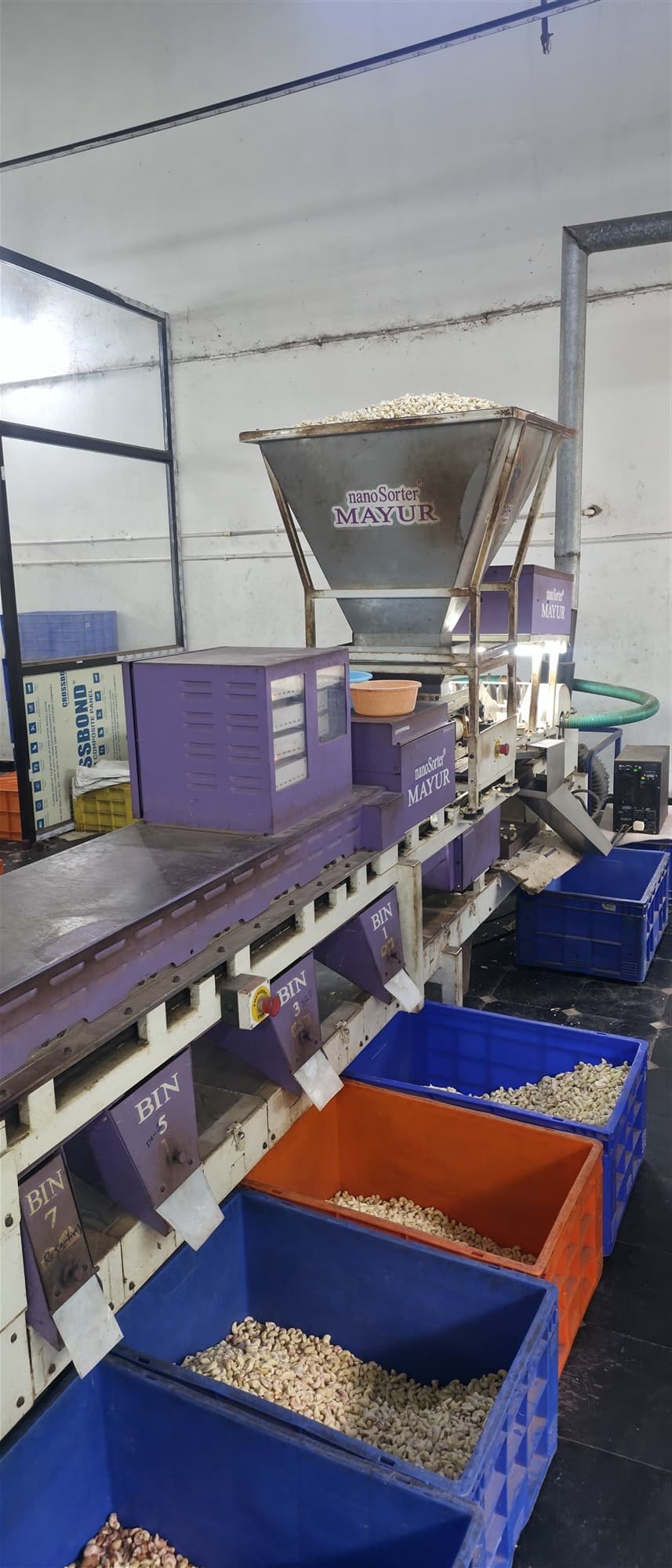
The "W" prefix designates Whole White kernels — the highest commercial grade. The number that follows represents the approximate count per pound. Therefore, W180 contains 180 or fewer kernels per pound, making them the largest and most premium. W240 and W320 are the workhorses of the trade, providing the best balance of size, yield, and price.
“When a buyer requests W240, they expect 210–270 kernels per pound. Any deviation is a quality failure, not a negotiation point.”
Beyond whole grades, the market includes Splits (S), Butts (B), Pieces (P), and Large White Pieces (LWP). LWP kernels, despite being broken, command significant demand from confectionery manufacturers and airlines due to their versatility in value-added products.
What buyers rarely discuss openly: the moisture content specification is as critical as the grade. Our facility targets below 5% moisture in all exported lots, verified by Karl Fischer titration. Excess moisture is the primary cause of aflatoxin contamination — the single largest reason for rejections at European ports.
At Gryne, every container is accompanied by a Certificate of Analysis from SGS, covering moisture, aflatoxin B1 levels, Salmonella, and physical defect percentage. This is our standard, not a premium add-on.